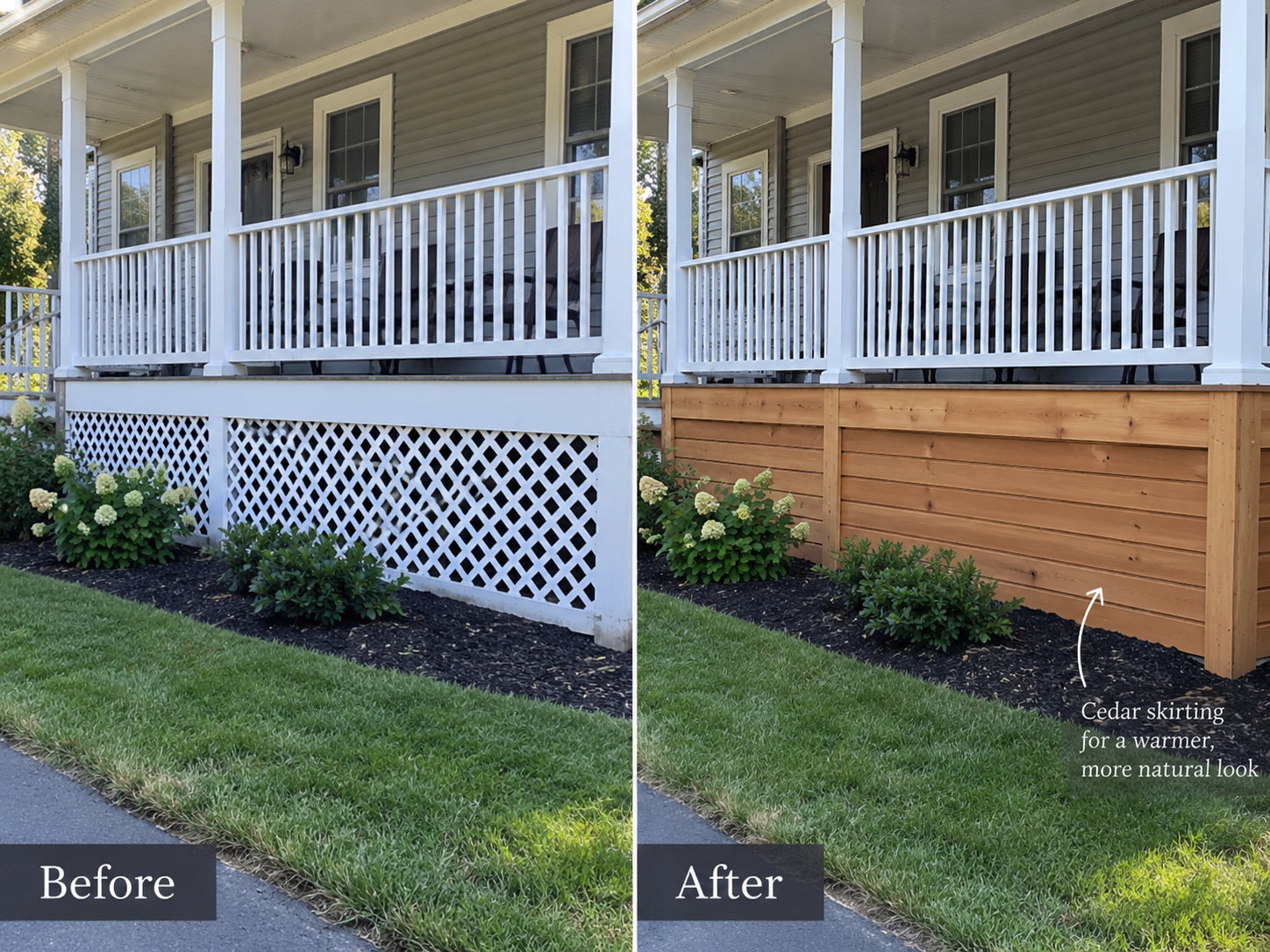
Sometimes improving the look of a home doesn’t require a major renovation or a huge budget.
At one of our renovation projects, we had old white lattice underneath a porch that had seen better days. It was worn, deteriorating, and taking away from the overall appearance of the exterior.
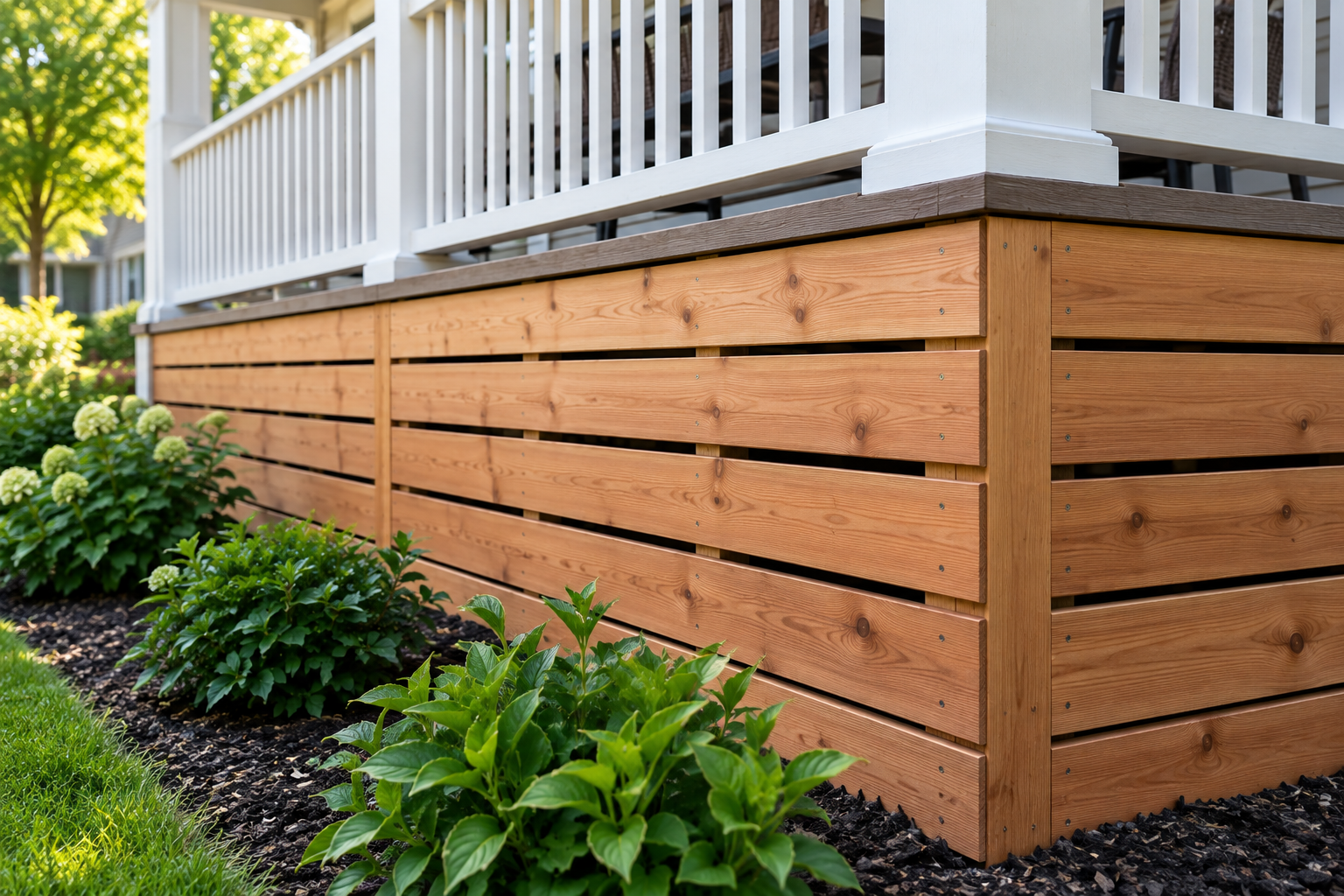
Instead of simply replacing it with more lattice, we decided to give the area a cleaner, more updated look using horizontal cedar boards.
It’s a relatively straightforward project, but visually, it can make a big difference.
Why Replace Traditional Porch Lattice?
Traditional vinyl or wood lattice is commonly used underneath decks and porches because it’s inexpensive, provides ventilation, and helps conceal the unfinished area underneath.
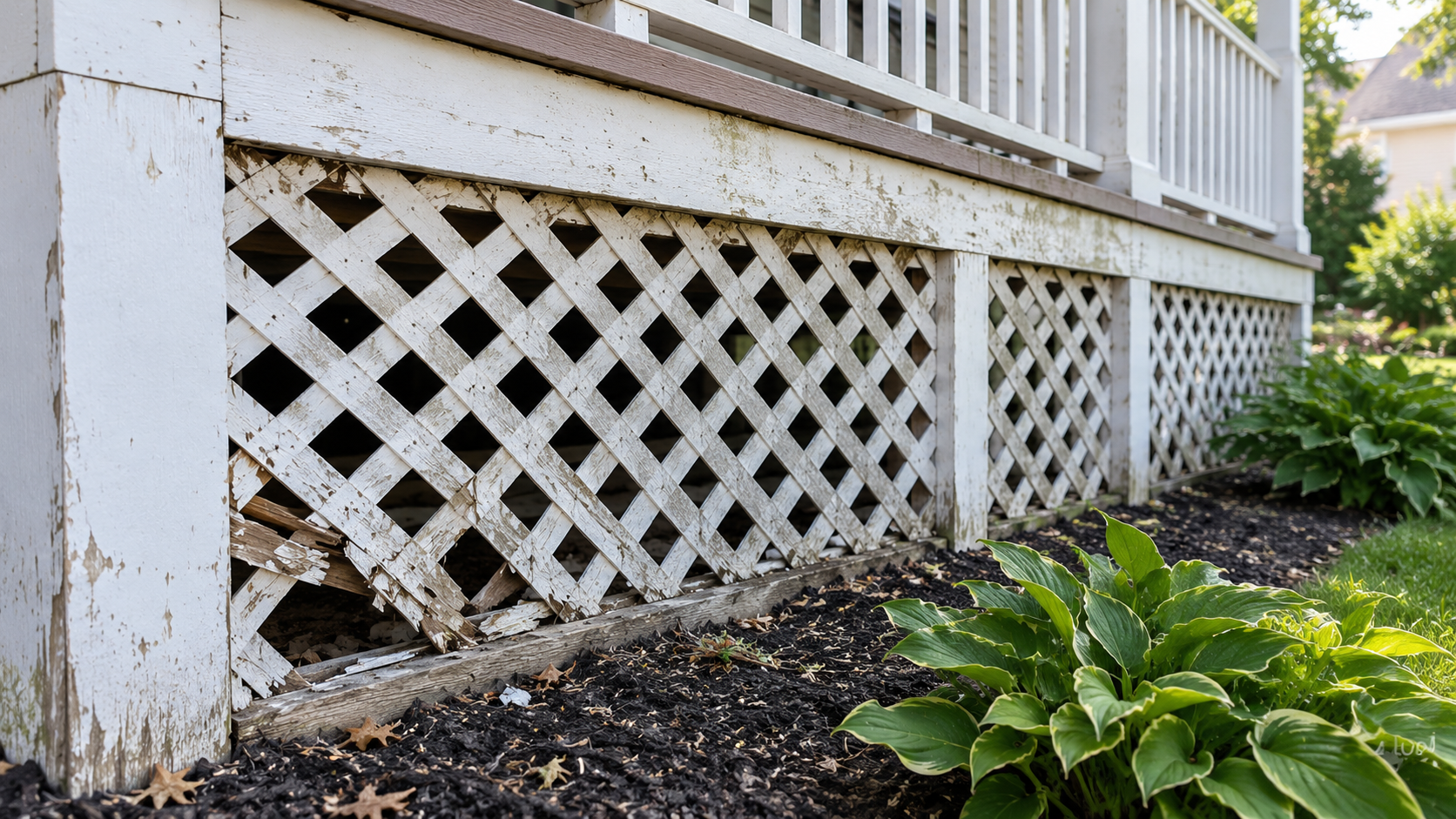
The downside? Over time, lattice can crack, warp, discolor, loosen, or simply start to look dated.
When we're evaluating a renovation, we like to ask a simple question:
Is there a relatively easy way to make this look more intentional and finished?
In this case, the answer was yes.
Rather than installing another sheet of traditional lattice, we used individual horizontal cedar boards to create a cleaner architectural look.
Why We Chose Cedar
There are plenty of materials that could be used for an exterior project like this, but cedar has several characteristics that make it particularly well suited for outdoor applications.
1. Cedar Naturally Handles Outdoor Conditions
Cedar contains natural oils that help it resist moisture, decay, and insects better than many untreated woods.
That doesn't mean cedar is maintenance-free, but it can be a good material choice for exterior projects where the wood will regularly be exposed to changing weather conditions.
2. It Creates a More Finished Look
This was really the driving force behind our decision.
Horizontal cedar boards create clean lines and give the area underneath the porch a more intentional appearance.
Instead of the skirting looking like something that was simply installed to cover an opening, it becomes part of the home's exterior design.
3. You Can Customize the Finish
Cedar can be left to weather naturally or finished with an appropriate exterior stain or sealer depending on the look you're trying to achieve.
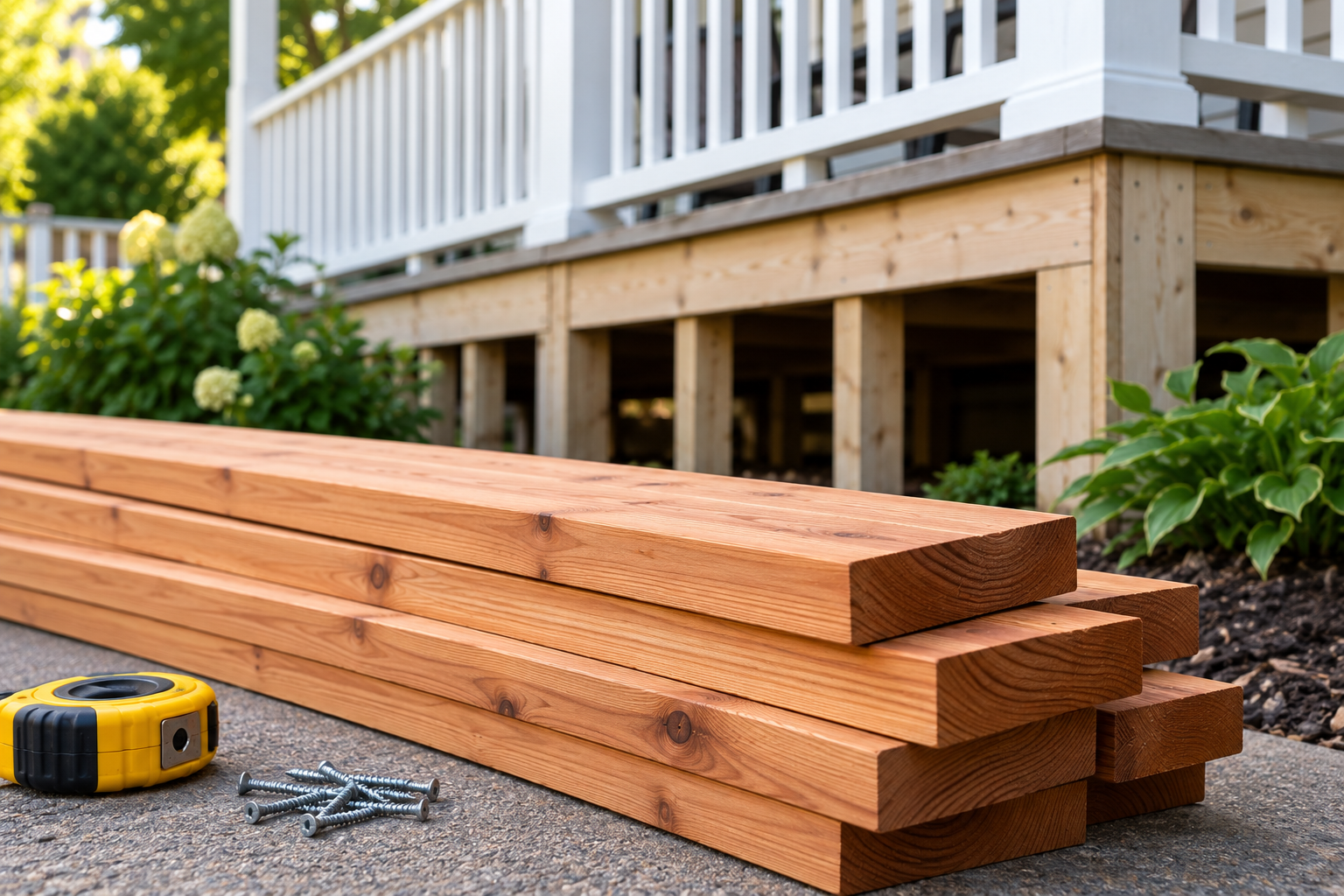
For this project, we're staining the boards to complement the rest of the exterior.
Don't Forget About Ventilation
Here's an important consideration if you're thinking about doing something similar.
You generally don't want to completely seal off the space underneath a porch or deck without considering ventilation and moisture. Leaving appropriate spacing between the horizontal boards can allow air to circulate while still concealing much of the area underneath.
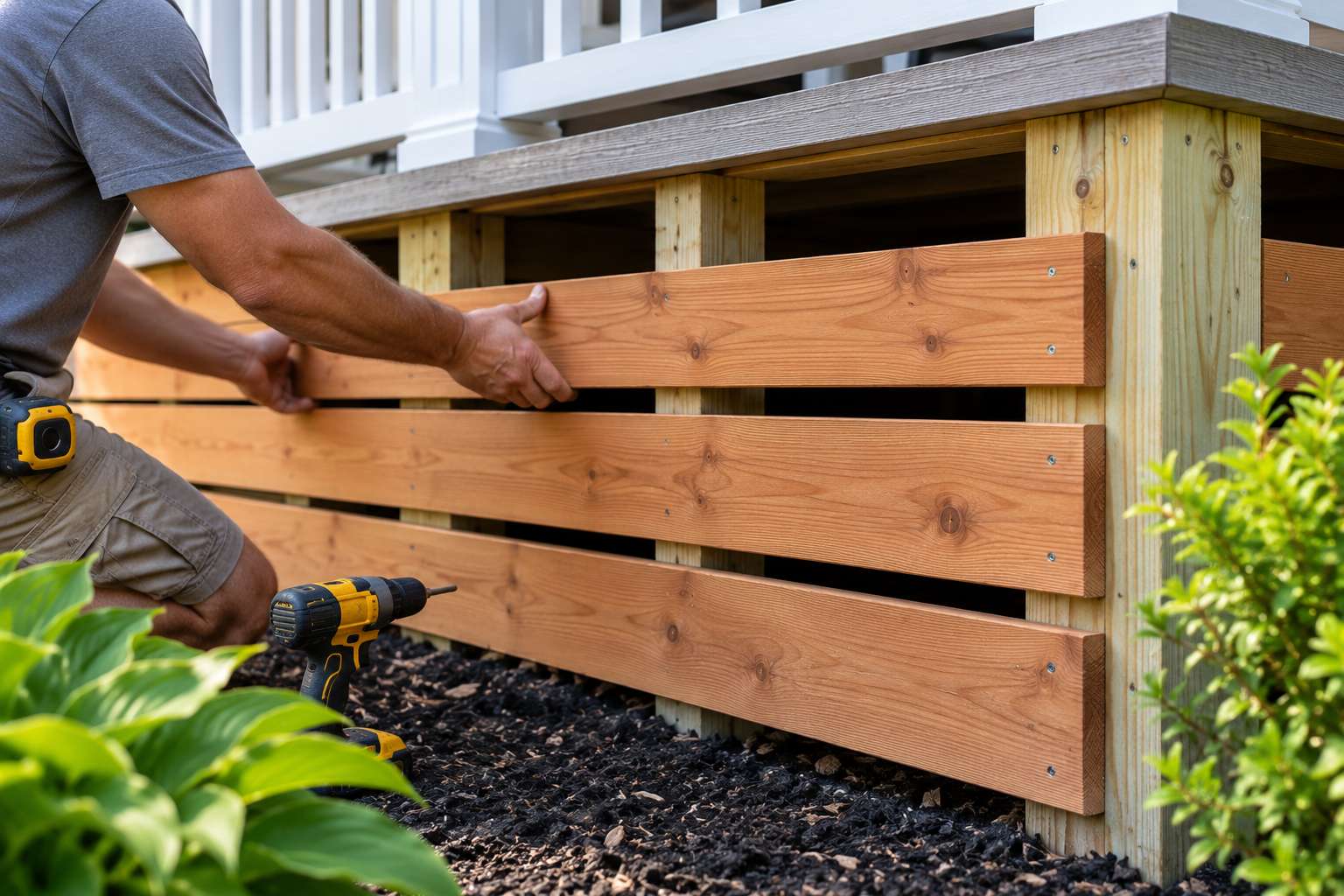
The appropriate spacing will depend on the particular structure and conditions, which is why exterior projects should always be evaluated individually.
What About Keeping Animals Out?
This became a bit of a debate during our project.
The horizontal boards will help restrict access underneath the porch, but the gaps necessary for ventilation may still leave enough room for smaller animals.
One possible solution is installing an appropriate wire mesh behind the cedar boards. From the outside, you primarily see the cedar while the mesh provides an additional barrier behind it.
Whether that's necessary depends on the property, the size of the openings, and whether animals getting underneath the structure have been a problem.
It's one of those details that's much easier to think about before everything is installed.
Does Replacing Lattice Add Value to Your Home?
This is where we think homeowners should be careful with the phrase "adds value."
Will replacing old lattice with cedar automatically increase your home's appraised value by the exact amount you spent? Probably not.
But that doesn't mean the project isn't worthwhile.
Exterior condition contributes to the overall impression someone gets when they approach a home. Worn, damaged, or deteriorating exterior components can make buyers wonder what else hasn't been maintained.
A clean, well-maintained exterior can have the opposite effect.
That's why we often separate renovation projects into a few different categories:
Value-adding improvements: Projects that may contribute directly to a home's market value.
Marketability improvements: Projects that can make a property more appealing to potential buyers.
Preventative improvements: Projects designed to help avoid larger maintenance problems.
Cosmetic improvements: Projects primarily intended to improve appearance.
Some renovations accomplish more than one of these goals.
Replacing deteriorated lattice with cedar is primarily a cosmetic and marketability improvement, but using an appropriate exterior material can also help create a longer-lasting solution.
Small Details Matter When You're Preparing a Home for Sale
One of the biggest mistakes homeowners can make before selling is assuming that every improvement needs to be expensive. It doesn't.
When we walk through a home before listing it, we're looking at the property through a buyer's eyes.
Where does the home look tired?
What maintenance items immediately stand out?
What relatively inexpensive projects could improve the presentation?
What should the homeowner not spend money on because they're unlikely to see enough benefit?
Those decisions are often more important than simply creating a long renovation checklist.
Renovating Homes Gives Us a Different Perspective as REALTORS®
We spend a lot of time inside houses. But we also spend time actually working on them.
Through our own renovation and investment projects, we've had to make many of the same decisions our clients face: what to repair, what to replace, where to spend more, where to save, and which improvements actually make a noticeable difference.
Not every project goes perfectly, either. That's part of why we're sharing more of the process.
Our Vik Tips: Renovation Edition series will take you behind the scenes of projects we're actually working on. We'll share the larger renovations, the little handyman projects, the decisions we're making, and some of the things we learn along the way.
Because understanding real estate isn't only about understanding contracts and comparable sales.
It's also about understanding the houses themselves.
Thinking About Updating Your Home Before Selling?
If you're considering selling a home in St. Charles, Geneva, Batavia, Campton Hills, South Elgin, or elsewhere in the Fox Valley, you don't necessarily need to renovate everything before putting your home on the market.
Sometimes the smartest decision is making a few targeted improvements.
Other times, the smartest decision is leaving something alone.
Before spending thousands of dollars preparing your home for sale, The Vik Home Team can help you look at the property from a real estate perspective and identify which improvements may matter most to today's buyers.