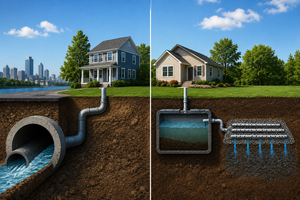
If you’re buying a home in the Fox Valley or surrounding western suburbs of Chicago, one of the biggest differences you may encounter is whether a property is connected to public water and sewer or relies on a private well and septic system.
Neither option is automatically “better” — it really depends on the property, your lifestyle, maintenance preferences, and long-term goals. Some buyers love the independence and lower utility costs of a private system, while others prefer the convenience and predictability of municipal utilities.
At The Vik Home Team, we help buyers understand the pros, cons, costs, and maintenance considerations of both so there are no surprises after closing.
What Is Public Water and Sewer?
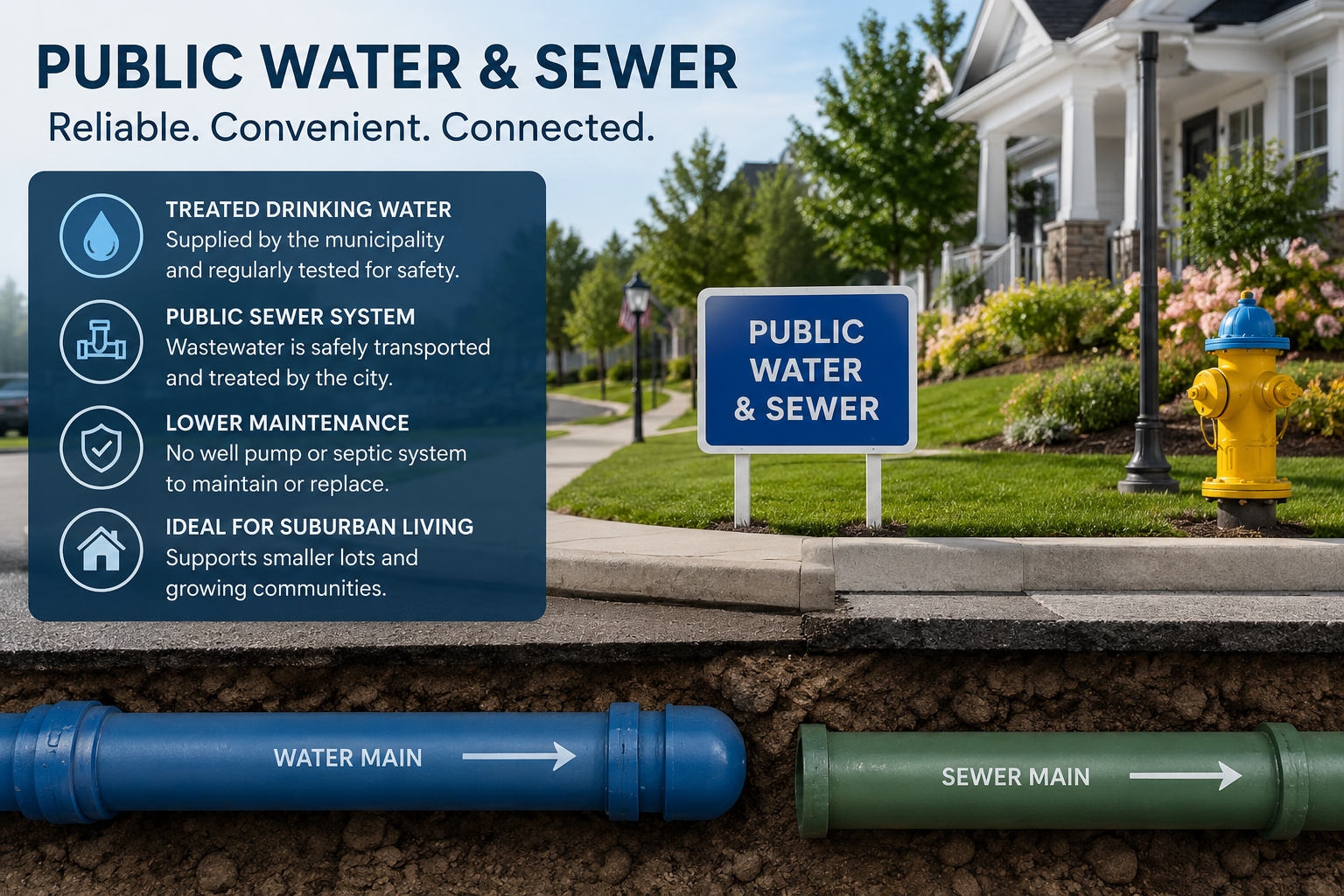
Public water and sewer means the home is connected to a municipality’s utility infrastructure. Water is supplied through city-operated treatment facilities, and wastewater is carried away through a public sewer system.
This setup is common in many suburban neighborhoods, townhomes, and more densely populated areas such as St. Charles, Geneva, and Batavia.
Benefits of Public Water & Sewer
Convenience
One of the biggest advantages is simplicity. Homeowners generally do not need to worry about maintaining a private well pump, septic tank, or drain field.
Predictable Maintenance
Municipalities are responsible for maintaining the larger infrastructure, treatment systems, and testing standards.
Water Quality Oversight
Public water systems are regulated and tested regularly for contaminants and safety standards.
Easier Financing & Insurance
Some lenders and insurance companies view public utilities as lower risk because there are fewer private systems to inspect or maintain.
Better for Smaller Lots
Public systems allow homes to be built on smaller parcels where septic systems may not fit or be permitted.
Cons of Public Water & Sewer
Monthly Utility Bills
Public utilities often come with recurring municipal water and sewer charges, which can become significant depending on usage.
Less Control
Homeowners rely on the municipality for water rates, repairs, and service interruptions.
Potential for Special Assessments
In some communities, utility infrastructure improvements can lead to additional costs or assessments.
Chlorine & Treatment Preferences
Some homeowners dislike the taste or additives commonly associated with municipal water treatment.

What Is a Private Well and Septic System?
A private well supplies water directly from underground groundwater sources, while a septic system handles wastewater treatment onsite through a septic tank and drain field.
These systems are commonly found in more rural or unincorporated areas, custom homes on acreage, and certain luxury neighborhoods throughout Kane County and surrounding areas.
Benefits of Private Well & Septic
Lower Monthly Utility Costs
Without municipal water and sewer bills, homeowners may save substantially on monthly expenses.
Independence
You are not dependent on city infrastructure or municipal rate increases.
Potentially Better Water Taste
Many homeowners prefer the taste of untreated well water, especially in areas with high-quality groundwater.
Great for Larger Lots & Rural Living
Private systems are common on homes with acreage, offering privacy and flexibility that may not exist in more densely populated subdivisions.
Environmentally Friendly Potential
Modern septic systems can be highly efficient when properly maintained.
Cons of Private Well & Septic
Maintenance Responsibility
Unlike public systems, the homeowner is responsible for repairs, maintenance, and testing.
Septic System Lifespan
Septic systems require periodic pumping and eventual replacement. Drain field repairs can become costly.
Water Testing Is Important
Private wells should be tested regularly for bacteria, nitrates, and other contaminants.
Potential Repair Costs
Well pumps, pressure tanks, septic tanks, and drain fields can require expensive repairs or replacement over time.
Usage Habits Matter
Septic systems are sensitive to excessive water usage and improper disposal practices.
Common Buyer Questions About Well & Septic
Is a well and septic system bad?
Not at all. Many homes with private systems operate perfectly for decades with proper maintenance. In fact, some buyers specifically seek them out for privacy, acreage, and lower utility costs.
Are inspections important?
Absolutely. If a home has private well and septic systems, buyers should strongly consider:
Well water testing
Septic inspections
Septic pumping records
Review of system age and permits
Can a septic system fail?
Yes, but many issues can be prevented through proper maintenance and responsible usage.
Does public water mean no maintenance?
Not entirely. While municipalities maintain the larger infrastructure, homeowners are still responsible for plumbing within the property.
Which Option Is Better?
The answer depends on your priorities.
Public Water & Sewer May Be Better If You:
Prefer convenience
Want fewer maintenance responsibilities
Like predictable utility management
Are purchasing in a traditional suburban neighborhood
Private Well & Septic May Be Better If You:
Want lower monthly utility costs
Prefer larger lots or rural properties
Like more independence
Are comfortable maintaining private systems
Final Thoughts
Whether you are considering a home with municipal utilities or a private well and septic system, understanding the differences upfront can help you make a more informed decision.
Every property is unique, and the “best” option often comes down to your lifestyle, budget, and comfort level with maintenance responsibilities.
If you are buying or selling in the Fox Valley or western suburbs of Chicago and have questions about utilities, inspections, acreage properties, or long-term ownership costs, The Vik Home Team is here to help.
Thinking About Buying or Selling?
The Vik Home Team helps buyers and sellers throughout St. Charles, Geneva, Batavia, and the surrounding Fox Valley communities navigate every aspect of the real estate process , from inspections and negotiations to long-term investment considerations.
#PickTheViks